Google Ads for restoration companies can drive urgent restoration leads fast, and businesses often see far higher conversion rates when they target searchers already looking for help. You can capture more calls by focusing on high-intent keywords, local ad targeting, and landing pages built for mobile users. The real difference comes from how you structure the campaign, because a few small changes can determine whether your phone rings or your budget disappears.
Key Takeaways
- Target high-intent keywords like “water damage restoration” and “emergency water removal” to capture urgent searchers ready to call.
- Use mobile-first landing pages with a prominent click-to-call button to turn ad clicks into immediate phone calls.
- Run tightly themed ad groups by service type and location to improve relevance, Quality Score, and lead quality.
- Add call-only or call-forwarding assets during business hours to increase call volume from people needing immediate help.
- Track calls, form fills, and cost per qualified lead so you can optimize toward revenue, not just clicks.
Why Google Ads Work for Restoration Leads
Google Ads work well for restoration leads because they place your company in front of people who are searching with urgent intent right when damage occurs.
You can target keywords that signal immediate need, so Google Ads for restoration companies connect you with homeowners and property managers before competitors do.
Because search volume reflects active demand, your clicks come from people already evaluating solutions, not passively browsing. That usually means stronger conversion rates, lower lead waste, and faster call volume than broad awareness channels.
You can also segment by service type, location, and device to align spend with the highest-value searches.
When you measure calls, form fills, and cost per lead, you get a clear performance loop that lets you optimize toward revenue, not vanity metrics.
Set Up Google Ads for Emergency Calls
To capture emergency calls, you need campaigns built around speed, intent, and local availability. You should structure accounts by service area and response type, then send traffic to a mobile-first landing page with one clear action: call now.
Use call-only or call-forwarding assets during business hours, and switch them off when your team can’t answer. Tight geographic targeting keeps spend inside your real service radius, which improves conversion rate and lowers wasted clicks.
Set bids for devices that produce calls, especially mobile, and track every phone lead with conversion tracking so you can calculate cost per call. Use ad schedules that match your dispatch coverage, then review hour-by-hour call volume.
When you align routing, timing, and measurement, you turn urgent demand into predictable revenue.
Choose Keywords for Water Damage Leads
You should target high-intent water damage terms like “water damage restoration,” “flood cleanup,” and “emergency water removal” because they signal urgent demand and stronger conversion potential.
Focus on emergency service search phrases that match how people actually search when they need help now, since those queries usually drive the fastest call volume.
Track keyword performance by cost per lead and call rate so you can shift budget toward the terms that produce the most qualified restoration leads.
High-Intent Water Damage Terms
For water damage campaigns, a small set of high-intent keywords usually drives the fastest lead quality because these searches signal immediate need, not casual research.
You should prioritize terms like water damage restoration, water cleanup, water extraction, flooded basement repair, and water damage repair service. These phrases align tightly with commercial intent and typically convert better than broad informational queries.
Build tightly themed ad groups so each keyword matches a specific service page and search intent. Use exact and phrase match to control relevance, then review search terms to remove drift.
Track call, form, and quote conversions by keyword so you can see which terms produce booked jobs, not just traffic. When you isolate proven terms, you lower wasted spend and increase lead value.
Emergency Service Search Phrases
When water damage turns urgent, emergency service search phrases usually convert best because they capture people who need help right now.
You should prioritize terms like “24/7 water damage restoration,” “emergency water removal,” and “same day flood cleanup” because they signal immediate intent and often drive higher call rates.
In Google Ads, segment these keywords into a separate ad group so you can tighten bids, ad copy, and landing pages around speed.
Use call extensions, mobile-preferred ads, and copy that says you respond fast.
Track call volume, cost per lead, and lead-to-job rate, not just clicks.
If a phrase attracts searches after storms or pipe breaks, it’s worth testing.
The goal is simple: intercept urgent demand before competitors do.
Write Crisis Ads That Get Clicks
Crisis-focused Google Ads need to lead with urgency, specificity, and a clear next step, because restoration prospects often search with immediate intent after water, fire, or mold damage.
You should pair the problem with a measurable response: “24/7 Water Damage Help” or “Fast Fire Cleanup in Your Area.” That structure improves relevance and filters out low-intent clicks.
Use numbers, service names, and location modifiers to increase Quality Score and click-through rate. Keep headlines tight, and test variations that emphasize speed, insurance support, and local availability.
Your description should reduce uncertainty and prompt action, not explain your whole process. The strongest ads match the searcher’s crisis, promise rapid help, and make calling feel like the shortest path to relief.
Build Landing Pages That Drive Calls
A high-converting restoration landing page does one job: turn urgent clicks into calls. You should match the ad’s promise above the fold, then place a click-to-call button where the thumb lands first.
Use one headline, one offer, and one clear next step; every extra choice lowers conversion. Add proof fast: review count, response time, license badges, and before-and-after evidence.
Keep forms short, because each field adds friction and reduces lead volume. Write benefits in outcome language, not feature lists, so buyers see speed, safety, and damage control.
Load pages quickly, especially on mobile, because delays kill intent. Track calls, form submits, and scroll depth to find drop-off points, then test one element at a time until your conversion rate climbs.
Use Geo-Targeting to Save Spend
You can tighten spend by targeting only the service areas where you actually convert calls into jobs.
Use geo-targeting to prioritize high-value ZIP codes, then exclude low-value zones that drain budget without driving revenue.
When you match your ads to your real coverage area, you improve lead quality and lower cost per acquisition.
Target Service Areas
Start by narrowing your Google Ads to the service areas that actually generate profitable jobs, because geo-targeting helps you cut wasted spend fast.
You need to match bids to real demand, then measure which ZIP codes produce calls, booked inspections, and completed restorations. That lets you scale with precision, not guesswork.
- Dense neighborhoods with frequent water damage
- Commercial corridors with larger claim values
- Storm-prone suburbs after weather events
- ZIP codes with fast response times
- Areas where estimates convert into contracts
Track call volume, lead quality, and cost per acquisition by location.
When you see stronger conversion rates in specific zones, allocate budget there and tighten your radius. This approach improves efficiency, strengthens local relevance, and gives you a repeatable system for growth.
Exclude Low-Value Zones
Once you’ve identified the ZIP codes that drive profitable restoration jobs, the next move is to cut off the areas that drain budget without producing quality leads.
Use Google Ads location exclusions to block low-converting suburbs, distant towns, and regions with weak average job values. Then compare call volume, lead-to-estimate rate, and closed revenue by geography.

If a zone delivers clicks but no booked inspections, exclude it fast. You’ll protect budget for storm, fire, and water-damage searches where intent is strongest.
Keep a tight radius around crews, warehouses, and dispatch speed, because response time often decides the win.
Revisit performance weekly, and expand only when a new area proves it can produce profitable calls, not just cheap traffic.
Track Calls and Leads to Improve Results
To improve Google Ads performance for restoration companies, track every call and lead so you can see which keywords, ads, and landing pages actually drive emergency inquiries.
Use call tracking, form tracking, and conversion tagging to tie each response to a source. Then calculate cost per qualified lead, not just clicks.
When you know which terms produce flooded-basement calls or smoke-damage estimates, you can raise bids on winners and cut waste fast.
- a ringing phone at 2 a.m.
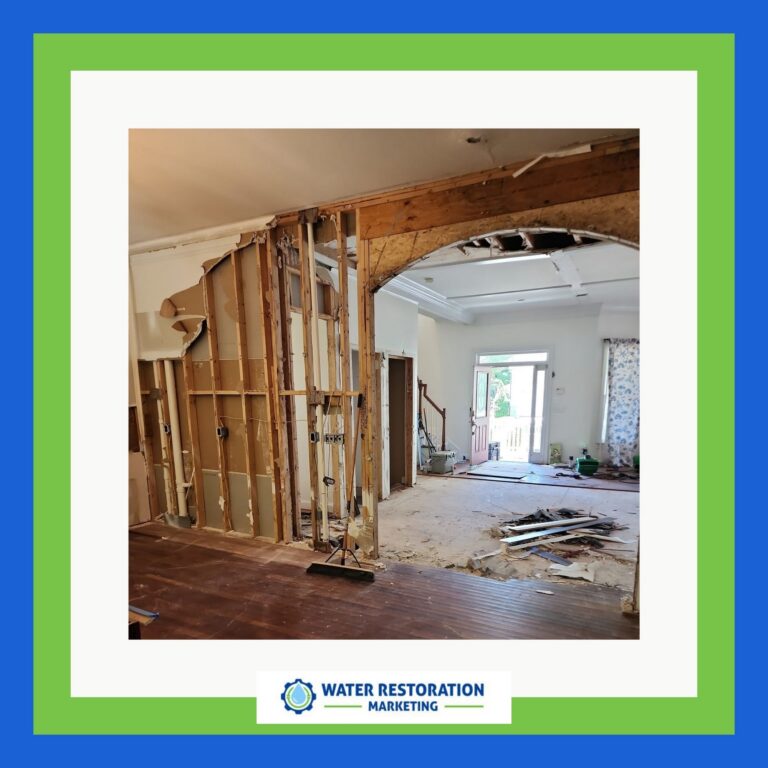
- a water-damaged hallway with wet drywall
- a search ad matched to “emergency restoration near me”
- a landing page with one clear call button
- a dashboard showing conversion rates and revenue
Frequently Asked Questions
How Much Should Restoration Companies Spend on Google Ads Monthly?
You should spend $3,000-$15,000 monthly, depending on market size, service mix, and call volume goals. Start lean, track cost per lead and booked job, then scale budget where ads reliably generate profitable emergency calls.
What Certifications Improve Ad Trust for Restoration Services?
I’d lead with IICRC certifications, EPA Lead-Safe, and state licensing because they signal competence and compliance. You’ll boost trust further with insurance, 24/7 response badges, and verified reviews that reduce friction and improve conversion rates.
How Fast Can Google Ads Start Generating Calls?
Lightning-fast: you can start seeing calls within hours, though reliable volume usually takes 1–3 weeks. You’ll track clicks, call extensions, and conversion rates, then optimize bids, keywords, and landing pages for faster, measurable growth.
Should Restoration Ads Run During Nights and Weekends?
Yes—you should run them nights and weekends, because emergencies don’t wait. You’ll capture urgent, high-intent calls when competitors are off, improve conversion rates, and maximize response time for water, fire, and mold leads.
How Do I Prevent Fake or Spam Restoration Leads?
You can cut fake leads fast: most spam clicks come from poor targeting. You’ll use call-only ads, strict location filters, negative keywords, reCAPTCHA, and call tracking to qualify emergencies and protect your budget.
Summary
Google Ads can be the engine that keeps your phone ringing when urgent restoration jobs hit. If you target high-intent keywords, tighten your geo-fencing, and pair crisis-driven ads with a fast, mobile-friendly landing page, you’ll turn more searches into calls. Track every lead, cut wasted spend, and keep optimizing. When you do, you’re not just buying clicks—you’re building a pipeline that works like a well-tuned fire alarm, alerting you the moment demand appears.